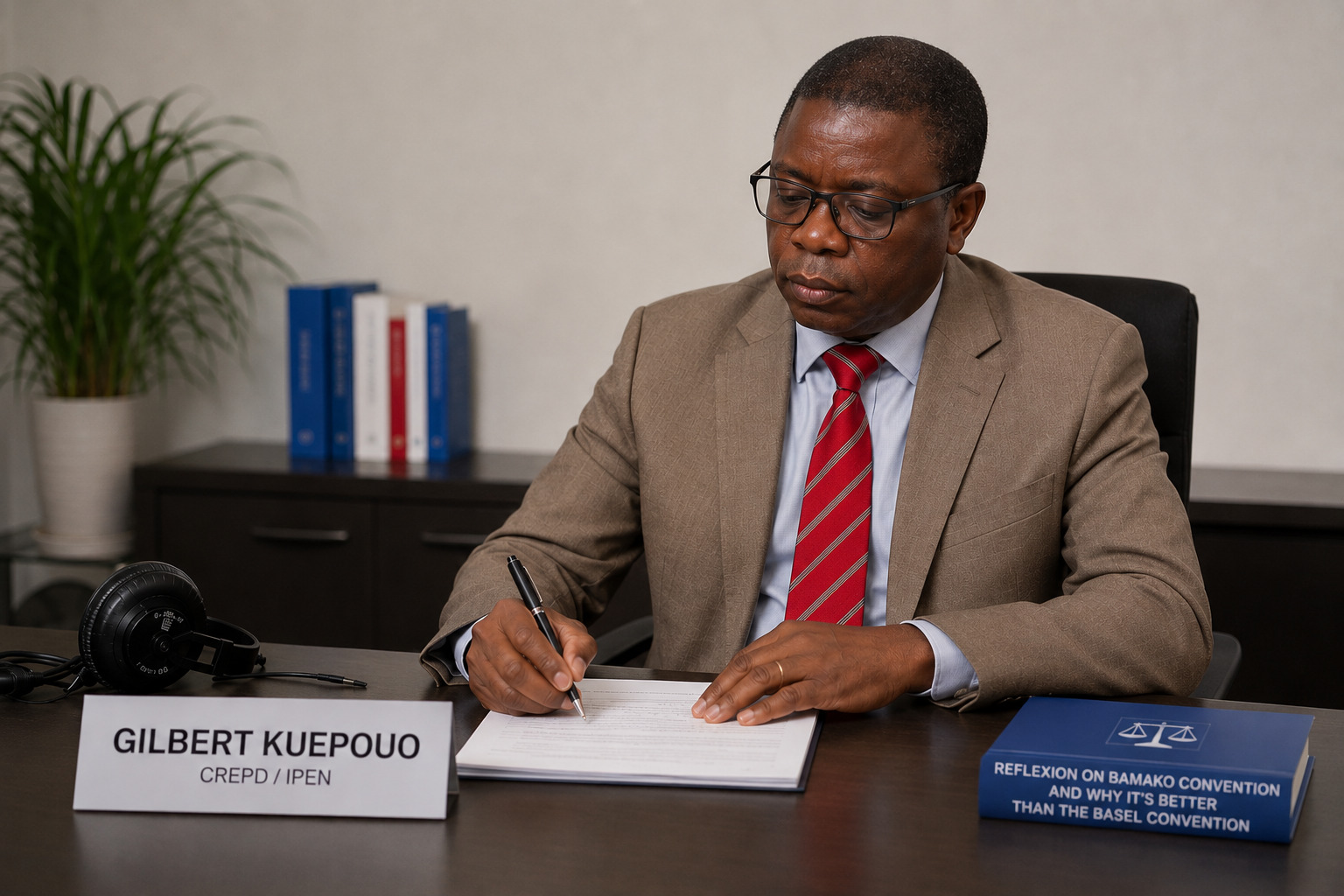
As Africa commemorates Africa Day amid growing concerns over environmental justice, the debate on global waste trade is gaining renewed urgency. In this opinion piece, Gilbert Kuepouo argues that the Bamako Convention, a treaty designed by Africans for Africa, could become the continent’s strongest legal shield against toxic waste dumping. By highlighting the limitations of the Basel Convention and the untapped potential of Bamako Convention, the author calls for stronger ratification, institutional support, and political commitment to protect Africa’s people, environment, and future generations from hazardous waste exploitation. The opinion is here released by Mouaye-info.com
How the Bamako Convention Can Drive Real Implementation of the Basel Convention in Africa
By Gilbert KUEPOUO
The African continent historically has been a dumping ground for hazardous chemicals, technologies, and wastes from the global north and some countries like China, India, and Turkey. This dumping is the result of brute economic forces, often characterized as « toxic colonialism, » as evidenced by the recent case of Italian waste dumped in Tunisia. The real costs of waste disposal are shifted onto the recipient population and environment, transferring negative externalities born in the global north and other countries onto the African continent.
As African civil society strives to drive action on waste trade as an urgent environmental and social justice issue in Africa during the observation of the Africa Day, it is important to look at the global and regional instruments responsible to control waste trade, their weaknesses, and areas of complementarity and effectiveness.
At the global level, the Basel Convention on the transboundary movement of hazardous waste and their disposal, adopted in 1989 and entered into force in 1992, controls the global trade of hazardous waste and other waste. While the Basel Ban Amendment (Article 4a of the Basel Convention), adopted in 1995 and entered into force relatively recently on 5 December 2019, prohibits the export of hazardous waste from developed countries (Annex VII) to developing countries (non-Annex VII), it is not applicable to countries that have not ratified it, including many African countries. Further, the Basel Ban Amendment does not apply to Basel’s Annex II waste, which includes household wastes, mixed plastic wastes, and non-hazardous e-wastes, nor does it apply to the hazardous wastes as defined by the African Bamako Convention. It is vital, therefore, for all African countries to ratify both the Basel Ban Amendment and the Bamako Convention.
The Bamako Convention, which I like to refer to as the “African dam regulation”, is a treaty of African nations created by Africans for Africans that entered into force in 1998 and is intended to protect the continent against the dumping of hazardous wastes and other waste. It is a regional agreement accepted by the Basel Convention under its Article 11, which allows legal waste trade agreements that are no less environmentally sound than the Basel Convention, and can, for example in particular interests of developing countries, be stronger than the Basel Convention. For example, the Bamako Convention offers stronger protections than the Basel Convention, in the following ways:
1. The Bamako Convention considers any waste containing either listed hazardous substances or listed hazardous characteristics as hazardous wastes. The Basel Convention, on the other hand, requires both a hazardous substance and a hazardous characteristic at the same time to qualify as hazardous waste.
2. The Bamako Convention considers all chemicals, whether they are factually waste or not, as hazardous waste if they are banned or severely restricted for environmental or human health reasons anywhere in the world. The Basel Convention does not consider these banned or severely restricted chemicals as wastes subject to control in Africa.
3. The Bamako Convention uniquely considers nuclear wastes of all kinds (Y0), as well as wastes collected from households, and incinerator ashes from the burning of wastes collected from households (Y46 and Y47) to be hazardous wastes. The Basel Convention does not consider these wastes as hazardous wastes.
4. The Bamako Convention bans the import of all hazardous wastes into the continent of Africa, as well as the ocean dumping in the waters under the jurisdiction of African States. There are no such provisions under the Basel Convention.
In light of these stronger protections, the Bamako Convention is truly a regional dam treaty to keep hazardous waste and other waste, including chemicals banned or severely restricted by governments around the world from trespassing the sovereign borders of the African continent and causing further harm. It provides African countries with strong protections against environmental injustice and exploitation, and it gives African countries future opportunities to self-regulate and set stronger trade bans or controls than the Basel Convention, keeping regional needs top of mind. For example, the Bamako Convention has a major role to play in preventing plastic waste as well as all forms of electronic waste from being exported to the African continent. It is also well-positioned to prohibit toxic technologies, such as the chemical recycling of plastics, as well as waste incineration from being moved to the African continent from the Global North.
However, while in legal force for 29 African countries, Bamako is not as yet fully functional as intended.
First, the Convention needs to be fully ratified by all 54 member states of the African Continent. To date, only 25 countries, including countries regularly targeted for hazardous waste dumping like Nigeria, Ghana, and Kenya, have not yet ratified the Bamako Convention. Second, and of critical importance is the mobilization of resources to allow for a steady source of funding, for adequate operationalization, and to hold regular meetings, as any Convention must have in order for it to function. An initial step to achieve this has been made during the last BRS COP through a decision calling for communication and synergies with Basel, aiming for a stronger partnership. The AMCEN-20 (African Ministerial Conference on the Environment) decision on Bamako also calls for ratification and convening of the next COP — COP4 of the Bamako Convention with the support of the African Union and UNEP (United Nations Environment Program) .
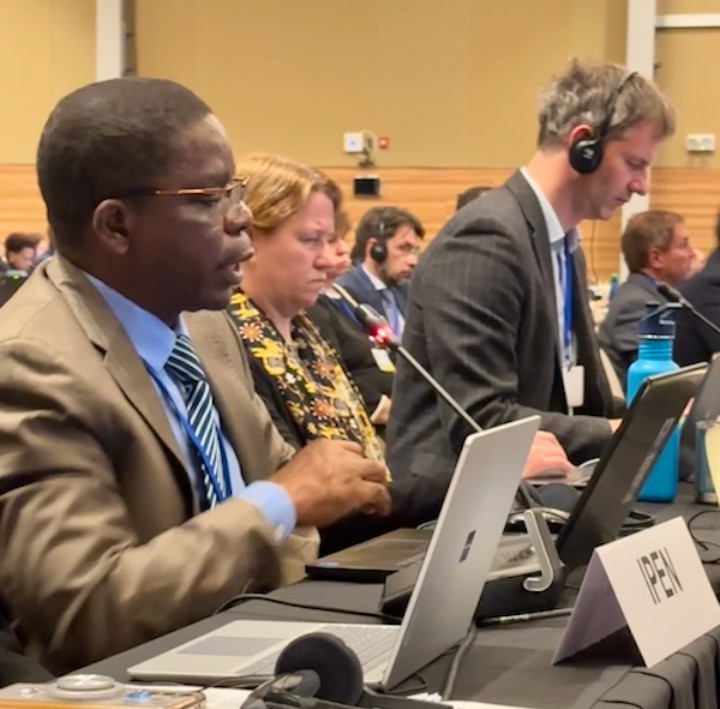
We must collectively call on UNEP, AMCEN, the GEF (Global Environment Fund) and all national governments of Africa to ratify Bamako if they have not, and moreover to explore ways to overcome these critical institutional challenges and gaps to finally achieve a functional regional convention on chemicals and waste. The most important job is finished — we have a convention. It is now our time to breathe life into it so it can fulfill its promise of protecting Africa, now and for its future generations.